How Mobile Toilets Actually Works (and How to Use It)
How Mobile Toilets Actually Work (and How to Use Them)
Ever wondered how mobile toilets actually work? Learn how portable toilets collect waste, control odors, manage ventilation, and stay hygienic — plus how to use and maintain them correctly.
What Are Mobile Toilets?
Mobile toilets, also known as portable toilets or portable restrooms, are self-contained sanitation units designed for locations where permanent restroom facilities are unavailable.
Unlike traditional bathrooms, mobile toilets do not normally require permanent sewer, water, or building infrastructure. This makes them ideal for construction sites, outdoor events, parks, campgrounds, festivals, emergency response areas, and remote industrial projects.
How Do Mobile Toilets Actually Work?
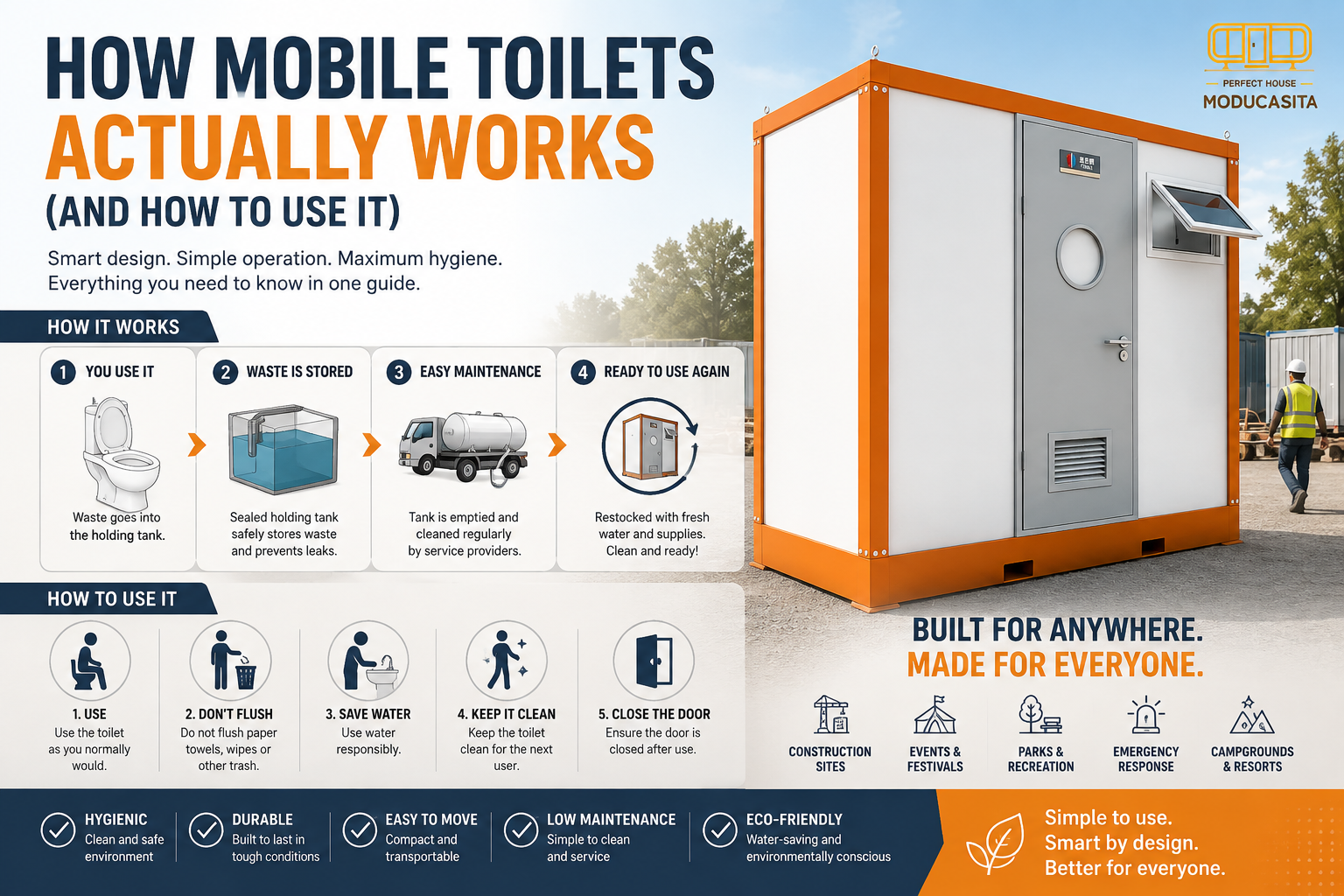
The operating principle of a standard mobile toilet is relatively simple. Waste passes through the toilet bowl and enters a sealed holding tank underneath.
The tank contains a controlled amount of water or sanitation solution, depending on the design. Special treatment chemicals can help reduce odors, break down waste, and maintain a more hygienic environment.
A ventilation system allows gases and odors to move away from the user area. When the tank reaches its service capacity, a sanitation truck pumps out the waste and cleans the tank.
Main Components of a Mobile Toilet
Although mobile toilets have a simple operating principle, several components work together to provide a safe and comfortable user experience.
1. Toilet Bowl
The toilet bowl is the primary user interface. High-quality units normally use smooth, easy-to-clean surfaces that resist stains and chemicals.
2. Waste Holding Tank
The waste tank is located underneath the toilet bowl. It temporarily stores waste until the unit is serviced.
3. Ventilation System
Ventilation helps move air and gases away from the interior while reducing unpleasant odors.
4. Door and Lock
A secure door provides privacy and safety. Commercial mobile toilets usually include an internal locking mechanism and an external occupancy indicator.
5. Roof
The roof protects the interior from rain and sunlight while contributing to natural ventilation.
6. Floor
The floor is designed to be durable, slip-resistant, and easy to clean.
How Does the Mobile Toilet Waste Tank Work?
The waste holding tank is one of the most important parts of a portable restroom. It allows the unit to operate without a connection to a permanent sewer system.
1 Waste Enters the Tank
When the toilet is used, waste falls directly into the holding tank below.
2 Waste Is Temporarily Stored
The tank stores waste until the unit reaches its servicing capacity.
3 Sanitation Chemicals Help Control Odors
Specialized sanitation products can help control odors and support waste breakdown.
4 The Tank Is Pumped Out
A professional sanitation truck connects a vacuum hose to the service port and removes the accumulated waste.
5 The Toilet Is Cleaned and Restocked
After pumping, the unit is cleaned, disinfected, deodorized, and restocked with essential supplies.
How Does Mobile Toilet Ventilation Work?
Ventilation is critical for maintaining a comfortable portable restroom. Without adequate airflow, odors can accumulate inside the unit.
Most mobile toilets use a vertical ventilation pipe that extends from the waste tank toward the roof. Warm air and gases naturally move upward through the pipe.
Some advanced models may use mechanical exhaust fans to increase airflow, particularly in hot climates or high-traffic environments.
How Do Mobile Toilets Control Odors?
Odor control is one of the most important aspects of portable sanitation.
- Ventilation pipes
- Sanitation chemicals
- Regular waste pumping
- Frequent cleaning
- Proper tank capacity management
- High-quality sealing components
Regular servicing is particularly important. Even the best-designed mobile toilet can develop unpleasant odors if the waste tank is overfilled or cleaning schedules are ignored.
How to Use a Mobile Toilet Correctly
Using a mobile toilet is similar to using a standard restroom, but a few simple practices can improve hygiene and help prevent damage.
1 Check the Occupancy Indicator
Make sure the unit is available before entering.
2 Lock the Door
Always lock the door after entering to ensure privacy.
3 Use the Toilet Properly
Use the toilet only for its intended purpose. Avoid putting large objects, plastic packaging, or other unsuitable materials into the toilet.
4 Dispose of Waste Correctly
Follow the instructions provided by the operator. Some portable restrooms provide separate bins for sanitary products and other waste.
5 Wash or Sanitize Your Hands
Use the hand sanitizer or handwashing station provided after using the restroom.
How Mobile Toilets Are Cleaned and Maintained
Regular maintenance is essential for hygiene, odor control, and product longevity.
Routine Cleaning
Interior surfaces should be cleaned and disinfected regularly, especially in high-traffic locations.
Waste Tank Pumping
Waste should be removed before the tank reaches an excessive fill level. Service frequency depends on the number of users and tank capacity.
Restocking
- Toilet paper
- Hand sanitizer
- Soap
- Paper towels
- Sanitation chemicals
Equipment Inspection
Operators should regularly inspect doors, locks, ventilation pipes, floors, tanks, and other structural components.
Different Types of Mobile Toilets
Mobile toilets are available in several configurations depending on the application and expected user experience.
| Type | Best Application | Main Advantage |
|---|---|---|
| Standard Mobile Toilet | Construction & Events | Affordable and practical |
| Flush Mobile Toilet | Events & Commercial Projects | Improved user experience |
| Accessible Mobile Toilet | Public Events & Facilities | Wheelchair-friendly design |
| Luxury Restroom | Weddings & VIP Events | Premium comfort |
How to Choose the Right Mobile Toilet
If you are purchasing mobile toilets for a business or project, consider the following factors.
1. Number of Users
Estimate expected daily traffic before deciding how many units you need.
2. Project Duration
Temporary events may require fewer units, while construction projects and long-term facilities may need a larger sanitation fleet.
3. Climate
For hot or humid environments, choose models with effective ventilation, UV-resistant materials, and durable construction.
4. Accessibility
Public projects should consider accessible restroom requirements.
5. Customization
Professional manufacturers can provide customized colors, logos, accessories, and layouts for distributors and commercial customers.
Why Choose High-Quality Mobile Toilets?
The quality of a portable restroom directly affects maintenance costs, user satisfaction, and service life.
- Durable HDPE construction
- UV and weather resistance
- Easy-to-clean interior surfaces
- Reliable ventilation systems
- Strong doors and locking systems
- Efficient waste tank design
- OEM and ODM customization
For businesses such as portable toilet rental companies, construction contractors, event suppliers, and campground operators, investing in reliable mobile toilets can reduce long-term operating costs.
Frequently Asked Questions About Mobile Toilets
How do mobile toilets actually work?
Most mobile toilets collect waste in a self-contained holding tank. Ventilation and sanitation systems help control odors, while professional service teams periodically pump out and clean the tank.
Do mobile toilets need a sewer connection?
No. Standard mobile toilets are designed to operate without a permanent sewer connection.
Do mobile toilets require water?
Standard units generally do not require a permanent water connection. Flush models may use a separate freshwater tank.
How often should a portable toilet be serviced?
Service frequency depends on usage, tank capacity, climate, and project requirements. High-traffic units may require frequent servicing.
Can mobile toilets be customized?
Yes. Many manufacturers provide customized colors, logos, accessories, interior layouts, and other OEM options.
Are mobile toilets suitable for construction sites?
Yes. Portable toilets are widely used on construction sites because they can be installed quickly without permanent plumbing.
Final Thoughts
Mobile toilets are much more sophisticated than they may appear. A combination of waste holding tanks, ventilation, sanitation chemicals, durable materials, and professional servicing allows portable restrooms to operate safely without permanent plumbing infrastructure.
Understanding how mobile toilets work also makes it easier to select, use, and maintain the right unit for your project.
Whether you need portable toilets for a construction site, outdoor event, campground, public park, industrial project, or emergency response operation, choosing a reliable product and maintaining it properly can significantly improve hygiene, comfort, and long-term operating efficiency.
Looking for High-Quality Mobile Toilets?
We provide durable mobile toilets for construction sites, outdoor events, campgrounds, public facilities, and commercial projects.
Ask our team about product specifications, customization, bulk orders, and international shipping.
Get a Free Quote