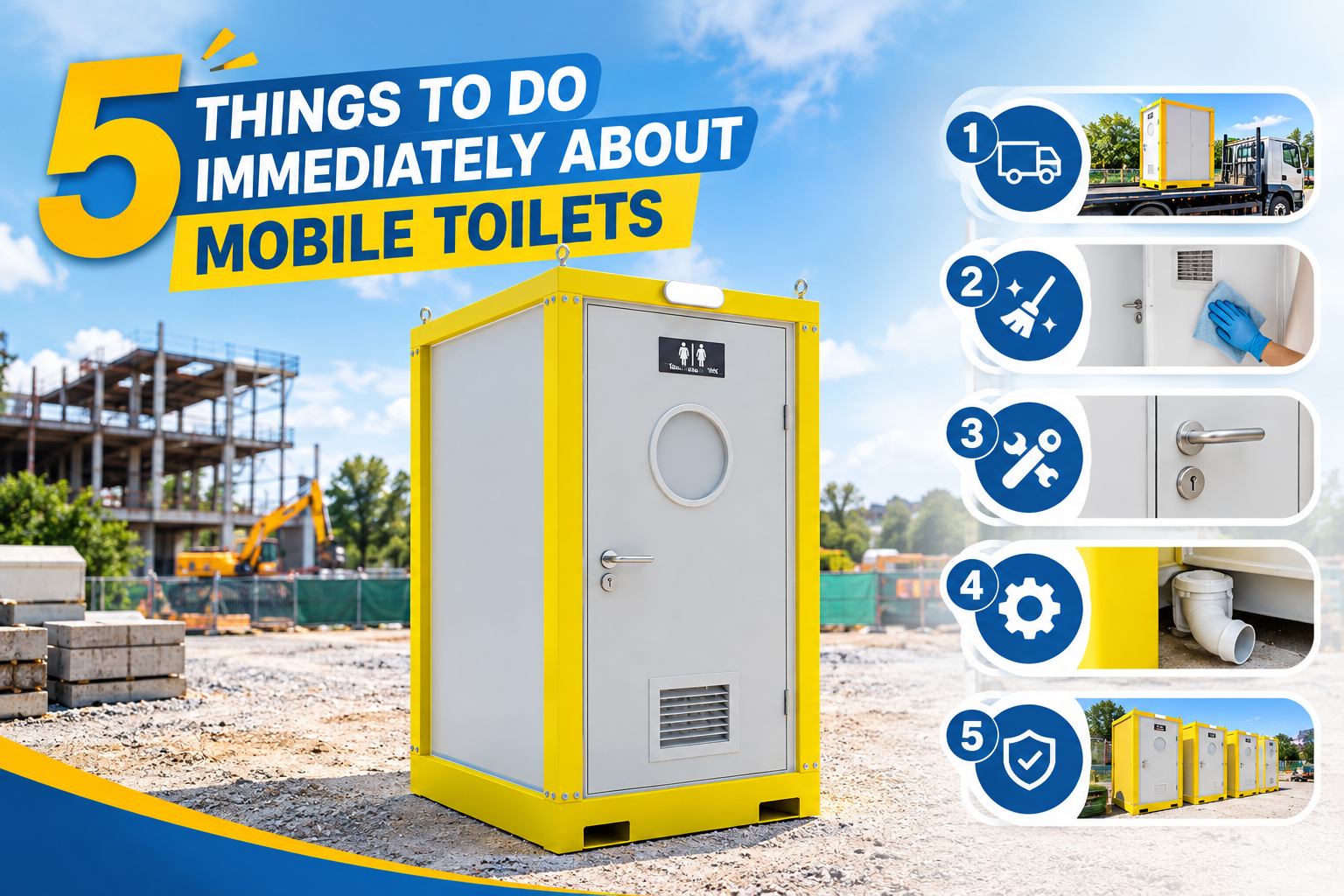
5 Things To Do Immediately About MOBILE TOILETS
5 Things to Do Immediately About Mobile Toilets
Whether you operate a construction site, organize outdoor events, manage a campground, or run a portable sanitation business, taking the right steps today can improve hygiene, reduce operating costs, and extend the service life of your mobile toilets.
Introduction
Mobile toilets are an essential sanitation solution for locations where permanent restroom facilities are unavailable or impractical. From construction sites and festivals to campgrounds, parks, agricultural operations, and emergency projects, portable toilets provide flexible access to essential sanitation.
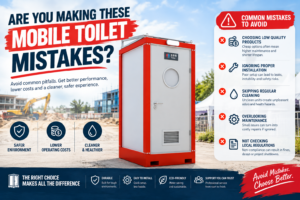
However, simply purchasing or installing a mobile toilet is not enough. Product selection, placement, cleaning, maintenance, and user management all affect the overall performance of a portable restroom.
You do not need to completely redesign your sanitation system to make an improvement. Five practical actions can immediately make your mobile toilets cleaner, more efficient, and easier to manage.
Check Whether You Have the Right Mobile Toilet
The first thing to do is evaluate whether your current portable toilet actually matches the needs of your project.
A standard mobile toilet may be perfectly suitable for a construction site, but a wedding, luxury campground, or corporate event may require a more comfortable solution.
Consider Your Application
- Construction sites may prioritize durability and easy servicing.
- Outdoor events may require appearance and user comfort.
- Campgrounds may benefit from improved ventilation and washing facilities.
- Public projects may require accessible restroom configurations.
- Emergency projects may prioritize rapid deployment.
Check the Product Condition
Inspect the walls, roof, floor, toilet bowl, door, ventilation pipe, locks, and waste tank.
Small structural problems can become expensive if they are ignored for a long period.
Improve Cleaning and Hygiene
Cleanliness is one of the most important factors affecting the performance and reputation of mobile toilets.
A well-designed portable restroom should be easy to clean, but even the best product requires a consistent sanitation routine.
Create a Simple Cleaning Checklist
- Clean the toilet bowl and surrounding surfaces.
- Disinfect frequently touched surfaces.
- Clean the floor and entrance area.
- Refill toilet paper and hand sanitizer.
- Check ventilation openings.
- Remove excessive waste before the tank becomes overloaded.
Cleaning frequency should be based on actual usage. A portable toilet serving hundreds of visitors at an event will require more frequent servicing than a unit used occasionally at a remote site.
Review Placement and Accessibility
Even a high-quality mobile toilet can perform poorly if it is placed in the wrong location.
Choose a Suitable Surface
Place the unit on stable, relatively level ground. Avoid locations that are prone to flooding, excessive mud, or unstable soil.
Make Access Easy
Users and service vehicles should be able to reach the unit easily. This is particularly important for large construction projects and outdoor events.
Consider Accessibility
If the project serves the general public, consider accessible mobile toilet models with wider entrances, additional interior space, and support rails.
Think About User Experience
Whenever possible, position mobile toilets in a location that is convenient but still provides privacy.
Create a Regular Maintenance Plan
One of the biggest mistakes operators make is waiting until a problem occurs before servicing a mobile toilet.
A preventive maintenance program can reduce unexpected downtime and help extend the service life of the unit.
Your Maintenance Plan Should Include
- Scheduled waste tank pumping.
- Regular interior cleaning and disinfection.
- Inspection of doors and locking systems.
- Inspection of ventilation components.
- Inspection of floors and structural panels.
- Replacement of damaged accessories.
- Restocking of sanitation supplies.
For rental businesses, maintenance records can also help determine which units require more frequent servicing.
Think About Long-Term Business Value
If you use mobile toilets commercially, the product should be viewed as a long-term business asset rather than simply a temporary restroom.
Portable sanitation companies can generate revenue through event rentals, construction contracts, long-term rentals, servicing, and additional sanitation products.
Look Beyond the Purchase Price
The cheapest mobile toilet is not always the most economical option. Consider the total cost of ownership, including durability, cleaning time, repairs, transportation, and expected service life.
Consider Customization
For distributors and rental companies, customized mobile toilets can strengthen brand recognition.
- Custom exterior colors
- Company logos
- Advertising graphics
- Custom accessories
- OEM and ODM configurations
How to Choose the Right Mobile Toilet
If you are purchasing new mobile toilets, start by defining your application and expected usage.
| Application | Recommended Features | Key Priority |
|---|---|---|
| Construction Sites | Durable body, large waste tank, easy maintenance | Durability |
| Outdoor Events | Good appearance, ventilation, hand sanitation | User Experience |
| Campgrounds | Ventilation, washing facilities, comfortable interior | Comfort |
| Public Projects | Accessible configurations and durable materials | Accessibility |
| Rental Businesses | Durable construction, easy cleaning, customization | ROI |
Why High-Quality Mobile Toilets Matter
A high-quality portable restroom can reduce maintenance requirements and improve the overall user experience.
- Durable HDPE construction
- UV and weather resistance
- Efficient ventilation
- Easy-to-clean interior surfaces
- Reliable doors and locks
- Efficient waste tank design
- Optional handwashing systems
- OEM and ODM customization
Frequently Asked Questions About Mobile Toilets
How often should mobile toilets be cleaned?
Cleaning frequency depends on the number of users, location, climate, and service requirements. High-traffic units may require daily cleaning and more frequent waste servicing.
How many mobile toilets do I need?
The required number depends on the expected number of users, project duration, event type, and applicable local sanitation requirements.
Do mobile toilets require permanent plumbing?
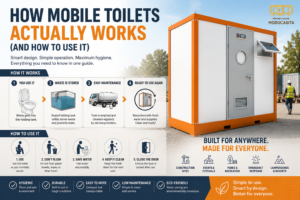
Standard mobile toilets are self-contained and generally do not require permanent water or sewer connections. Some flush models use separate freshwater tanks.
Can mobile toilets be customized?
Yes. Depending on the manufacturer, mobile toilets can be customized with different colors, logos, accessories, layouts, and sanitation features.
Are mobile toilets suitable for construction sites?
Yes. Portable toilets are widely used on construction sites because they can be deployed quickly and operate without permanent plumbing infrastructure.
Final Thoughts
Mobile toilets are a practical sanitation solution, but their performance depends on more than the product itself.
The five actions above provide a simple starting point: choose the right unit, improve hygiene, review placement, establish preventive maintenance, and evaluate the long-term business value of your equipment.
Whether you are managing a construction project, operating an outdoor event, developing a campground, or building a portable toilet rental business, a well-planned sanitation system can improve efficiency, customer satisfaction, and operating results.
Looking for Reliable Mobile Toilets?
Explore durable portable sanitation solutions for construction sites, outdoor events, campgrounds, public facilities, rental businesses, and commercial projects.
Get a Free Quote