Is Your Mobile Toilet Strategy Quietly Failing?
Is Your Mobile Toilet Strategy Quietly Failing?
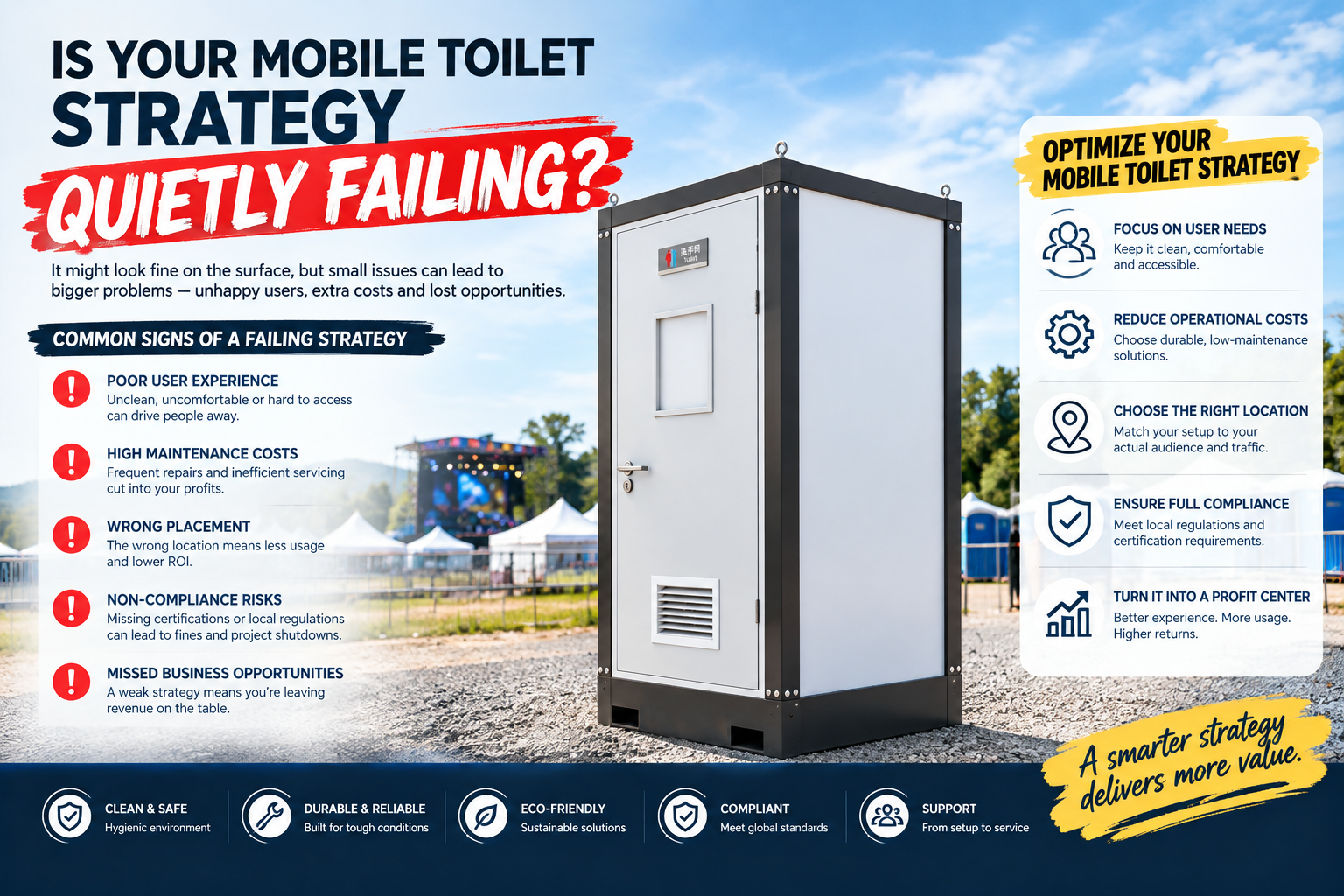
Your mobile toilets may look fine on the outside, but hidden problems can gradually increase operating costs, reduce customer satisfaction, and make daily operations harder to manage. From poor product selection to inefficient servicing, small mistakes can quietly undermine your entire portable sanitation strategy. Here is how to recognize the warning signs and build a more reliable system.
Mobile Toilets
Informational / Commercial
/is-your-mobile-toilet-strategy-quietly-failing/
Why Your Mobile Toilet Strategy Matters More Than You Think
Mobile toilets are essential for many businesses and projects. Construction companies rely on them to provide sanitation at temporary worksites. Event organizers use portable restrooms to accommodate visitors. Campgrounds, farms, parks, and outdoor tourism businesses need practical sanitation solutions where permanent facilities may be unavailable or expensive to build.
However, purchasing mobile toilets is only one part of the process. A successful operation also requires suitable product selection, careful placement, reliable cleaning schedules, preventive maintenance, and a clear understanding of user demand.
When these elements are not coordinated, problems may develop gradually. Service visits become less efficient, repairs occur more frequently, and users begin to notice inconsistent cleanliness or comfort.
7 Warning Signs Your Mobile Toilet Strategy Is Failing
A struggling mobile toilet operation does not always have one obvious problem. More often, several small issues appear together. Look for these warning signs before they become expensive operational challenges.
Maintenance Costs Keep Rising
If the same units repeatedly need repairs, replacement parts, or emergency servicing, your maintenance approach may be too reactive. Review repair records to identify recurring issues and determine whether the product, usage conditions, or maintenance schedule is contributing to the problem.
Cleaning Schedules Are Inconsistent
A schedule that does not reflect actual usage can lead to overflowing tanks, unpleasant odors, missing supplies, or unnecessary service visits. High-traffic sites and quieter locations rarely have identical servicing needs.
Customers Keep Making the Same Complaints
Repeated complaints about cleanliness, access, odors, damaged doors, or poor comfort indicate that your current process may not be meeting user expectations. Track complaints and connect them to specific units, locations, and service records.
Your Units Do Not Match the Application
Standard portable toilets may suit some construction sites, while premium events or tourism facilities may need flush toilets, handwashing stations, or accessible units. Using the wrong configuration can create avoidable costs and user dissatisfaction.
Service Routes Waste Time
Poorly planned locations can increase travel distance and complicate waste servicing. If your team frequently makes unnecessary trips or struggles to reach units, review site layouts and route planning.
You Track Purchase Price but Not Total Cost
A low initial price can be misleading if the unit is difficult to clean, expensive to transport, or frequently out of service. Compare purchase price alongside maintenance, servicing, replacement parts, expected lifespan, and disposal costs.
Purchasing Decisions Are Mostly Reactive
Waiting until equipment breaks or demand increases suddenly can limit your choices. Reviewing capacity, product condition, upcoming projects, and supplier lead times helps you plan purchases more effectively.
Are You Choosing the Wrong Mobile Toilets?
Product selection has a direct impact on long-term operational performance. A mobile toilet designed for occasional use may not be the best choice for a busy construction site or a high-volume public event.
Before choosing a model, evaluate the environment in which it will operate and the expectations of its users.
Match the Product to the Application
- Construction sites: Prioritize durability, practical servicing, stable placement, and suitability for the expected workforce.
- Outdoor events: Consider visitor volume, queue management, cleaning frequency, appearance, and the need for handwashing facilities.
- Campgrounds and glamping resorts: Consider user comfort, privacy, visual appearance, and the sanitation infrastructure available at the site.
- Remote worksites: Evaluate transportation, servicing access, weather exposure, and the availability of waste disposal services.
- Public facilities: Consider accessibility, expected demand, vandal resistance, local requirements, and ease of maintenance.
Do Not Ignore Material and Construction Quality
Materials, structural design, hinges, door locks, ventilation components, and interior surfaces all influence product performance. For plastic portable toilets, ask the supplier about the material specification, UV resistance where relevant, cleaning requirements, and suitability for your climate and usage conditions.
Request product specifications, warranty terms, and clear information about replacement parts before making a bulk purchase.
Poor Maintenance Planning Can Quietly Damage Your Business
Mobile toilet maintenance should be based on actual usage and site conditions rather than guesswork. A unit serving a crowded outdoor event may need much more frequent attention than one used by a small team at a low-traffic location.
Build a Usage-Based Servicing Schedule
Consider user volume, tank capacity, operating hours, temperature, weather, and the availability of servicing vehicles. Use these factors to establish a schedule, then adjust it based on inspection results and user feedback.
Use Preventive Maintenance Instead of Waiting for Breakdowns
- Inspect doors, locks, hinges, and handles.
- Check for visible leaks or structural damage.
- Inspect ventilation and flushing components where applicable.
- Clean interior and exterior surfaces according to the product instructions.
- Check hygiene supplies and handwashing facilities.
- Record repairs, servicing, and recurring problems.
Inefficient Placement Can Increase Your Operating Costs
Where you place mobile toilets affects accessibility, user satisfaction, and the efficiency of maintenance teams. Poor placement may make units difficult to reach, expose them to avoidable environmental risks, or increase the time needed for routine servicing.
Review Every Installation Location
- Choose stable, reasonably level ground.
- Check drainage and local flooding risks.
- Keep servicing access clear and practical.
- Provide suitable access for the intended users.
- Consider privacy, lighting, pedestrian traffic, and site safety.
- Follow local rules and site-specific placement requirements.
For operators managing multiple locations, grouping service visits by area and recording access restrictions can reduce unnecessary travel. Review routes periodically as project layouts and user demand change.
The Hidden Costs Behind a Weak Mobile Toilet Strategy
The purchase price is only one part of the total cost of owning and operating mobile toilets. A more useful approach is to evaluate the complete lifecycle of each unit.
| Cost Category | Potential Problem | Improvement Opportunity |
|---|---|---|
| Purchase | Choosing a model unsuitable for the application | Compare specifications and expected usage before ordering |
| Transportation | Inefficient loading, delivery, or relocation | Review dimensions, logistics, and installation access |
| Cleaning | Unnecessary visits or missed servicing | Set schedules based on actual demand |
| Repairs | Recurring component failures | Track faults and review product quality and maintenance |
| Downtime | Units unavailable when users need them | Inspect equipment and plan repairs promptly |
| Replacement | Premature retirement of poorly maintained units | Maintain equipment and review lifecycle costs |
Actual costs vary by market, labor rates, usage intensity, waste disposal requirements, and product design. Use your own operating records to identify the largest opportunities for improvement.
Your Mobile Toilet Strategy Is Also a Customer Experience Strategy
A mobile toilet is often a small part of a larger project, but users notice it immediately when cleanliness, privacy, or accessibility is inadequate. For event organizers, rental companies, construction managers, and campground operators, sanitation quality can influence how people perceive the entire site.
Focus on the Details Users Notice
- Clean, well-maintained interiors.
- Working doors and locks that provide privacy.
- Suitable ventilation and odor management.
- Accessible placement and clear directions.
- Available hygiene supplies where provided.
- Prompt responses to reported problems.
Collecting feedback is a useful way to find problems that routine inspections may miss. Record complaints by location and issue, then use the information to improve servicing and product selection.
How to Improve Your Mobile Toilet Strategy
You do not need to redesign every part of your operation at once. Start with a clear picture of current performance, identify the most frequent problems, and make improvements that can be measured.
1. Audit Your Existing Units
Record each unit's model, age, location, condition, service history, and recurring repair issues. This creates a practical baseline for future purchasing and maintenance decisions.
2. Measure the Right Indicators
Track cleaning completion, repair frequency, downtime, customer complaints, servicing time, and operating cost per unit. Compare results over time instead of relying on impressions.
3. Review Your Cleaning and Service Plan
Compare service frequency with real user demand. Adjust schedules for high-traffic sites, seasonal changes, and special events while following sanitation requirements.
4. Standardize Purchasing Decisions
Create a checklist covering intended use, material, capacity, durability, ventilation, accessories, transport, maintenance, warranty, and replacement-part availability.
5. Improve Supplier Communication
Ask manufacturers for accurate product specifications, packaging dimensions, lead times, warranty details, customization options, and after-sales support.
6. Review Performance Regularly
Hold periodic reviews to identify recurring problems, compare locations, plan replacement needs, and update procedures when operating conditions change.
Mobile Toilet Strategy Checklist
Use this checklist to identify gaps in your current operation.
- We have selected mobile toilets suitable for each application.
- We understand the expected user volume at each location.
- Our units are placed on suitable ground with practical servicing access.
- Cleaning and waste servicing follow a documented schedule.
- We perform routine inspections and record maintenance.
- We monitor recurring complaints and equipment failures.
- We track operating costs beyond the initial purchase price.
- We have a process for identifying and replacing damaged units.
- We understand applicable accessibility and local sanitation requirements.
- We evaluate suppliers using quality, service, and lifecycle cost.
If several items are missing from your current process, begin by addressing the issues that create the greatest safety, hygiene, reliability, or cost concerns.
Choosing a Reliable Mobile Toilet Supplier
A suitable supplier should help you select products that fit your actual operating conditions—not simply recommend the most expensive or lowest-priced model.
Before placing an order, consider asking the manufacturer:
- Which models are suitable for my intended application?
- What materials and key components are used?
- What are the product dimensions, weight, and tank capacity?
- What cleaning and maintenance procedures are recommended?
- Are replacement parts available?
- What warranty and after-sales support are provided?
- Can colors, logos, accessories, or configurations be customized?
- What packaging, shipping, and delivery options are available?
If you are sourcing mobile toilets internationally, also confirm applicable import requirements, destination-country regulations, shipping arrangements, and any required product documentation before finalizing the order.
Frequently Asked Questions About Mobile Toilet Strategy
1. What is a mobile toilet strategy?
It is a plan for selecting, placing, cleaning, servicing, maintaining, and replacing mobile toilets based on user demand, site conditions, budget, and operational requirements.
2. How can I tell if my mobile toilet operation is inefficient?
Look for repeated customer complaints, frequent emergency repairs, missed cleaning schedules, unnecessary service trips, extended downtime, and rising operating costs. Reviewing service records can help reveal the underlying causes.
3. How often should mobile toilets be serviced?
It depends on user volume, tank capacity, operating hours, weather, and site conditions. High-traffic locations generally require more frequent inspections and servicing than locations with limited use.
4. What should I consider when buying mobile toilets?
Consider application, user volume, material quality, tank capacity, ventilation, accessibility, cleaning requirements, transportation, replacement parts, warranty, and total cost of ownership.
5. Can better mobile toilets reduce operating costs?
A suitable and durable product may reduce avoidable maintenance and replacement costs. Results depend on the product, usage, servicing practices, and local operating conditions.
6. Are mobile toilets suitable for construction and outdoor events?
Yes. Mobile toilets are used in both settings, but the most suitable model and service plan depend on the number of users, duration of use, site layout, comfort expectations, and available sanitation infrastructure.
Final Thoughts: Is Your Mobile Toilet Strategy Quietly Failing?
A mobile toilet strategy can become inefficient without one major failure. Poor product selection, inconsistent maintenance, inconvenient placement, and limited cost tracking can gradually affect reliability and customer satisfaction.
The solution is to manage mobile toilets as part of a complete operational system. Evaluate product suitability, use maintenance records, monitor customer feedback, measure operating costs, and review your supplier relationships regularly.
Whether you manage a construction project, run a portable toilet rental business, organize outdoor events, or operate a campground, a well-planned approach can help you make better purchasing decisions and maintain more reliable sanitation facilities.
Looking for the Right Mobile Toilet Solution?
Explore mobile toilet options for construction sites, outdoor events, campgrounds, public facilities, and portable sanitation businesses. Share your application, estimated quantity, and preferred configuration to help identify a suitable solution.
Request a QuoteBefore publishing, replace example.com with your real website domain, update the company name in the structured data, and connect the CTA to your actual inquiry page. Review all product-specific statements against your available models and specifications.