Are You Making These Mobile Toilet Mistakes
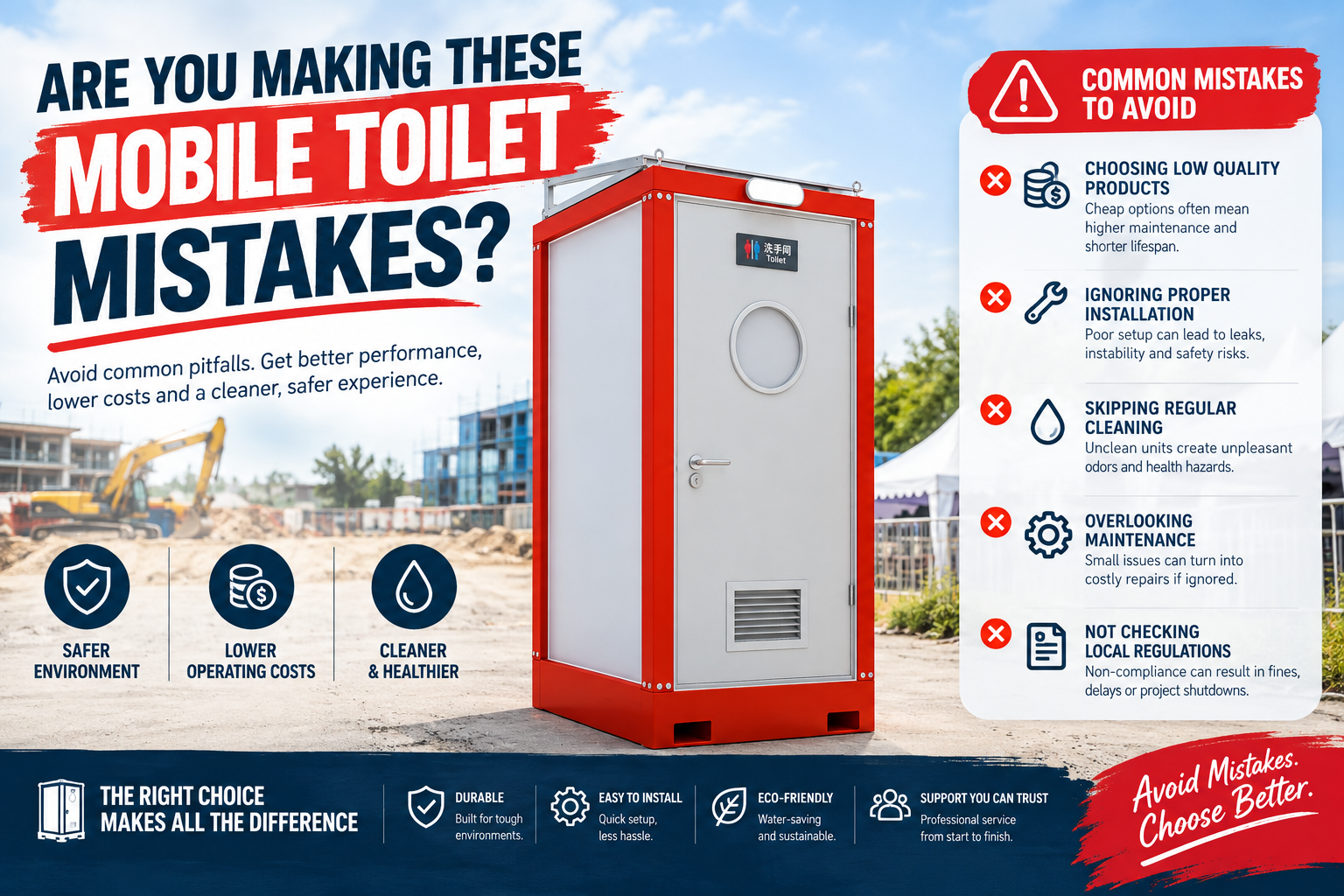
Are You Making These Mobile Toilet Mistakes?
Mobile toilets are a practical sanitation solution for construction sites, outdoor events, campgrounds, parks, farms, and temporary projects. But choosing the wrong unit or managing it incorrectly can lead to unnecessary costs, unpleasant odors, poor hygiene, and customer complaints. Here are the most common mobile toilet mistakes—and what you can do to avoid them.
Mobile Toilets
Portable Toilets, Portable Restroom, Mobile Toilet Maintenance
/are-you-making-these-mobile-toilet-mistakes/
Why Mobile Toilet Mistakes Matter
A mobile toilet may look like a simple product, but its performance depends on much more than the toilet itself. Product selection, placement, cleaning, ventilation, waste management, maintenance, and user capacity all affect the overall experience.
For businesses, these details can directly influence operating costs, customer satisfaction, equipment lifespan, and service efficiency. For construction companies and event organizers, poor sanitation management can also create unnecessary operational problems.
7 Common Mobile Toilet Mistakes
Whether you operate one portable restroom or manage hundreds of units, the following mistakes are worth checking.
Choosing the Wrong Mobile Toilet
One of the biggest mistakes is selecting a mobile toilet based only on appearance or purchase price.
Different applications require different configurations. A construction site may need durable standard units, while a wedding or luxury event may require a more comfortable flush toilet or restroom trailer.
Ignoring Location and Placement
Even a high-quality portable toilet can perform poorly when placed in the wrong location.
Uneven ground, poor accessibility, excessive heat, flooding risks, or excessive distance from users can create unnecessary problems.
Poor Cleaning and Hygiene
Cleaning is one of the most important parts of mobile toilet management. Waiting until a unit becomes visibly dirty can result in poor user experience.
High-traffic mobile toilets require a more frequent cleaning and servicing schedule.
Ignoring Ventilation and Odor Control
Odor is one of the most common complaints associated with poorly maintained portable toilets.
Poor ventilation, delayed servicing, excessive heat, and improper waste-tank treatment can all contribute to unpleasant conditions.
Skipping Regular Maintenance
Some operators only inspect mobile toilets when a problem has already appeared.
This reactive approach can result in damaged doors, leaking components, blocked systems, damaged seats, or other avoidable issues.
Forgetting Accessibility
Not every user has the same mobility requirements. A sanitation plan that ignores accessibility may exclude part of the intended user population.
Accessible portable toilets typically provide additional interior space and easier access.
Focusing Only on Purchase Price
A low purchase price does not necessarily mean a lower total cost over the life of the product.
Maintenance, transportation, cleaning, replacement parts, durability, and servicing requirements can all affect the total cost of ownership.
Mobile Toilet Maintenance Checklist
A simple maintenance routine can help extend equipment life and maintain a better user experience.
Daily or High-Frequency Checks
- Check overall cleanliness.
- Inspect doors and locks.
- Check toilet paper and hand hygiene supplies.
- Check for visible leaks.
- Check odor levels.
- Inspect high-touch surfaces.
Regular Service Checks
- Empty and service the waste tank according to usage.
- Clean the interior and exterior surfaces.
- Inspect ventilation components.
- Check hinges, handles, and locks.
- Inspect flushing components where applicable.
- Check the overall structural condition.
How to Choose the Right Mobile Toilet
If you are purchasing mobile toilets for a new project, rental business, campground, event company, or construction site, consider the following factors.
| Factor | What to Consider |
|---|---|
| Usage | Expected number of users and frequency of use |
| Application | Construction, events, camping, parks, agriculture, etc. |
| Material | Durability, weather resistance, and ease of cleaning |
| Tank Capacity | Suitable capacity for the expected service interval |
| Ventilation | Air circulation and odor management |
| Accessibility | Whether accessible units are required |
| Transportation | Ease of moving, loading, and positioning the unit |
| Maintenance | Cleaning requirements and availability of replacement parts |
| Customization | Color, branding, accessories, and optional configurations |
| Total Cost | Purchase price plus transportation, cleaning, maintenance, and service |
Why Mobile Toilet Quality Matters for Your Business
For businesses that operate multiple portable toilets, product quality can have a significant effect on daily operations.
Durable mobile toilets can be easier to clean, transport, maintain, and reuse across different projects.
For Rental Companies
Rental operators need units that can withstand repeated transportation and frequent use. Easy-to-clean surfaces, durable components, and readily available replacement parts can simplify fleet management.
For Construction Companies
Construction sites typically prioritize durability, easy servicing, and reliable sanitation access for workers.
For Events and Outdoor Tourism
Appearance and user comfort may become more important. Modern designs, flushing systems, hand-washing facilities, and customized finishes can improve the overall experience.
How to Reduce Mobile Toilet Operating Costs
Avoiding mistakes is not only about improving hygiene. It can also help reduce unnecessary operating expenses.
- Choose the right unit for the application. Avoid paying for features that your project does not need.
- Establish a preventive maintenance schedule. Regular inspections can identify small problems earlier.
- Optimize service routes. For larger fleets, efficient servicing can reduce transportation time.
- Track unit performance. Maintenance records can reveal which units require frequent repairs or replacement.
- Work with a reliable manufacturer. Consistent quality and replacement-part availability can simplify long-term fleet management.
A Quick Mobile Toilet Mistake Check
Before your next project, ask yourself these questions:
- Are we using the right type of mobile toilet?
- Is the location stable, accessible, and well drained?
- Is the cleaning schedule based on actual usage?
- Are ventilation and odor control being properly managed?
- Are inspections performed regularly?
- Do we have suitable accessibility options?
- Are we evaluating total cost of ownership rather than purchase price alone?
Frequently Asked Questions About Mobile Toilets
1. What are the most common mobile toilet mistakes?
Common mistakes include choosing the wrong model, poor placement, inadequate cleaning, insufficient ventilation, irregular maintenance, overlooking accessibility, and focusing only on the initial purchase price.
2. How often should mobile toilets be cleaned?
Cleaning frequency depends on usage, location, weather, and the type of mobile toilet. High-traffic locations generally require more frequent cleaning and servicing than low-use locations.
3. How can I reduce odors in a mobile toilet?
Effective ventilation, regular cleaning, appropriate waste-tank treatment, good hygiene practices, and timely servicing can help control odors.
4. What should I look for when buying mobile toilets?
Consider the intended application, expected usage, material quality, tank capacity, ventilation, accessibility, transportation, maintenance requirements, customization options, and total cost of ownership.
5. Are mobile toilets suitable for construction sites?
Yes. Mobile toilets are commonly used on construction and other temporary worksites where permanent restroom infrastructure may not yet be available or practical.
6. Can mobile toilets be customized?
Depending on the manufacturer and model, customization may include colors, logos, branding, accessories, interior configurations, and different sanitation systems.
Final Thoughts: Are You Making These Mobile Toilet Mistakes?
Mobile toilets are designed to provide flexible and practical sanitation wherever permanent restroom facilities are unavailable or impractical. However, even a high-quality portable toilet can create problems when it is poorly selected, incorrectly placed, inadequately cleaned, or neglected during maintenance.
The key is to look beyond the product itself. Think about the complete lifecycle—from purchasing and transportation to placement, daily use, cleaning, maintenance, and eventual replacement.
By avoiding these common mobile toilet mistakes, businesses can create a cleaner user experience, simplify operations, and make better long-term purchasing decisions.
Looking for Reliable Mobile Toilets?
If you are sourcing mobile toilets for construction, outdoor events, campgrounds, rental businesses, public projects, or other applications, choosing the right manufacturer is an important first step.
Explore durable portable sanitation solutions designed for different markets, applications, and operating conditions.
Get a QuoteSEO note: Replace the example canonical URL, company name, CTA link, and structured-data organization information with your actual website and company details before publishing.